


Preparing the Environment for Peace and Concentration

There is something special about walking into a thoughtfully prepared Montessori environment.
Before a child chooses a material or begins a lesson, the environment is already communicating something: You are welcome here. You have a place here. You are capable, and there is meaningful work waiting for you.
In Montessori education, the prepared environment is much more than a beautiful classroom with carefully arranged materials. It is a place intentionally prepared to support the child’s physical, intellectual, social, and emotional development.
When preparing the environment, it can be helpful to look beyond the shelves and materials and ask:
Does this environment support peace, purposeful activity, independence, and concentration?
There is no such thing as a perfectly prepared classroom. The environment is always evolving because the children are always evolving. Our role is to prepare thoughtfully and remain open to making adjustments along the way.
Peace Begins With the Environment
Peace in a Montessori classroom does not mean silence or the absence of movement. Children are naturally active, curious, and social. A peaceful environment is one where activity has purpose and where children can move, work, communicate, and interact with one another respectfully.
Order, accessibility, and predictability help make this possible. When materials have a clear place and the environment is easy for children to understand, they can spend less energy figuring out what to do and more energy engaging in their work.
The environment should also encourage independence.
Can the child reach the materials?
Can they carry an activity from beginning to end?
Can they care for themselves and their surroundings?
Can they return materials to their proper place?
A thoughtfully prepared environment allows the child to do as much as possible without depending on an adult. Appropriately sized furniture, accessible materials, and carefully arranged activities give children the opportunity to make choices and take responsibility for their work.
This is one of the purposes of order in the Montessori environment. Order is not simply about keeping a classroom tidy. It gives children a sense of predictability and helps them gradually develop an internal sense of order.

The Environment Should Invite Concentration
Concentration cannot be forced. Instead, we can create conditions that make it possible for concentration to develop.
Meaningful materials, appropriate challenges, comfortable work spaces, a predictable rhythm, and uninterrupted time all contribute to this.
Sometimes the greatest gift we can give a child is time—to choose, begin, make a mistake, repeat, and finish.
The adult is also an important part of the environment. Our voice, movement, energy, and timing affect the atmosphere of the classroom. A calm presence and intentional movement can help preserve the peaceful quality of the environment.
We might pause before interrupting a child and ask:
Does this child need me right now, or can I give them the opportunity to continue independently?
The guide’s role is not to create concentration for the child, but to prepare the conditions in which the child can become absorbed in meaningful work.
Keeping the Environment in Order
A prepared environment is never completely finished.
Throughout the day, materials are used, chairs move, spills happen, and shelves become less orderly. This is simply part of having a living classroom.
Children can participate in caring for their environment by returning materials, cleaning spills, caring for plants, and restoring their work spaces. These simple actions help children experience responsibility as a natural part of community life.
At the same time, order does not mean perfection. A classroom can be active, joyful, and lived-in while still feeling organized and cared for.
Beauty has a Purpose
Montessori environments are often recognized for their simplicity, warmth, and beauty. But beauty is not decoration for decoration’s sake.
A thoughtfully prepared environment tells the child that they are valued and that their work matters. Natural materials, appropriate furniture, plants, artwork, and carefully considered spaces can create warmth and belonging.
At the same time, beauty should support concentration rather than compete with it.
We do not need to fill every wall or add color simply because there is an empty space. Brightly colored rugs with busy patterns, excessive posters, decorative displays, or too many visual elements can create visual noise.
A rug can be beautiful while serving a practical purpose, such as defining a workspace. A wall display can be meaningful when it connects to the children’s work or current studies. The question is whether these elements are contributing to the environment or simply adding stimulation.
It can be helpful to occasionally ask:
Does this serve a purpose?
Does it support the child?
Does it contribute to the beauty and harmony of the room?
There should be places for the child’s eyes to rest.
This does not mean a Montessori classroom needs to be plain or without color. Thoughtful use of color, artwork, plants, and natural elements can bring warmth and beauty to the environment. What matters most is intentionality.
Sometimes preparing the environment means adding something.
Sometimes it means taking something away.
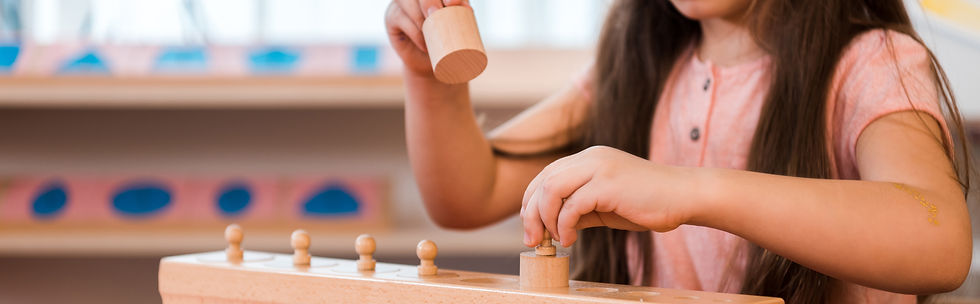
Peace is Built Through Community
A peaceful environment is also created through relationships.
Children are learning how to share space, wait for a material, communicate respectfully, solve problems, and recognize that their actions affect others.
These lessons happen naturally throughout the day. With clear and respectful limits, children have opportunities to practice responsibility and learn how to participate in a community.
Peace is not simply something we ask children to maintain.
It is something we build together.
Observation: Let the Children Tell US
Perhaps the most important part of preparing the environment is noticing whether it is actually working for the children who are in it.
A classroom can look beautiful and orderly and still not meet the needs of a particular group of children. Observation helps us see beyond appearances.
We can quietly notice:
What are the children choosing?
What are they avoiding?
Where do they become engaged?
Where do they struggle?
Can they find what they need?
Are they able to work independently?
Are certain areas consistently crowded or neglected?
Are the materials appropriate for the children who are currently in the classroom?
These observations can gently guide our next steps.
Perhaps a material needs to be introduced or removed. Perhaps a shelf needs to be moved. Maybe an area has too much visual stimulation, or a child needs more support before being expected to work independently.
The answer will be different for every classroom because every group of children is different.
The Children are our Best Guides
When we take the time to watch, the environment gives us valuable information about what is working and what may need to change. This allows us to respond to the children in front of us rather than preparing according to a fixed idea of what the classroom should look like.
Preparing Ourselves
The physical environment is only one part of preparation. We also bring ourselves into the classroom each day.
Our patience, energy, voice, movement, and expectations influence the atmosphere around us.
We may ask ourselves:
Am I giving the children enough time?
Am I allowing them to do what they are capable of doing for themselves?
Am I creating a calm presence in the classroom?
Am I giving children the space to work without unnecessary interruption?
We will not always get it right. Some days will feel peaceful, and others will feel busy and challenging. That is part of working with children.
The prepared adult, like the prepared environment, is always a work in progress.
A Living Environment
The Montessori prepared environment is not a museum. It is a living environment that changes with the children.
Materials are introduced and removed. Shelves evolve. Children’s interests change. Independence grows. The needs of the community shift.
Perhaps the most important question is not:
“Does my classroom look Montessori?”
but:
“Is this environment helping these children become more independent, focused, capable, and connected?”

When we prepare with intention and respond to the children’s needs, the environment becomes more than a beautiful classroom. It becomes a place where children can develop at their own pace, experience the satisfaction of doing things for themselves, and discover the joy of meaningful work.
And perhaps that is the heart of the prepared environment.


Comments